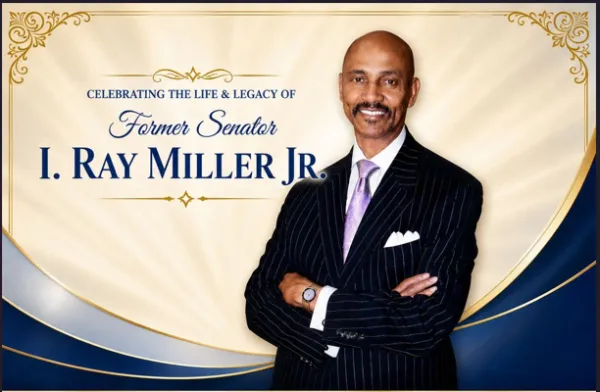
Ray Miller Jr., Former Ohio Senator, Dies at 77
The former Ohio state senator spent decades building institutions around Black health, education, leadership and political power.
· Updated
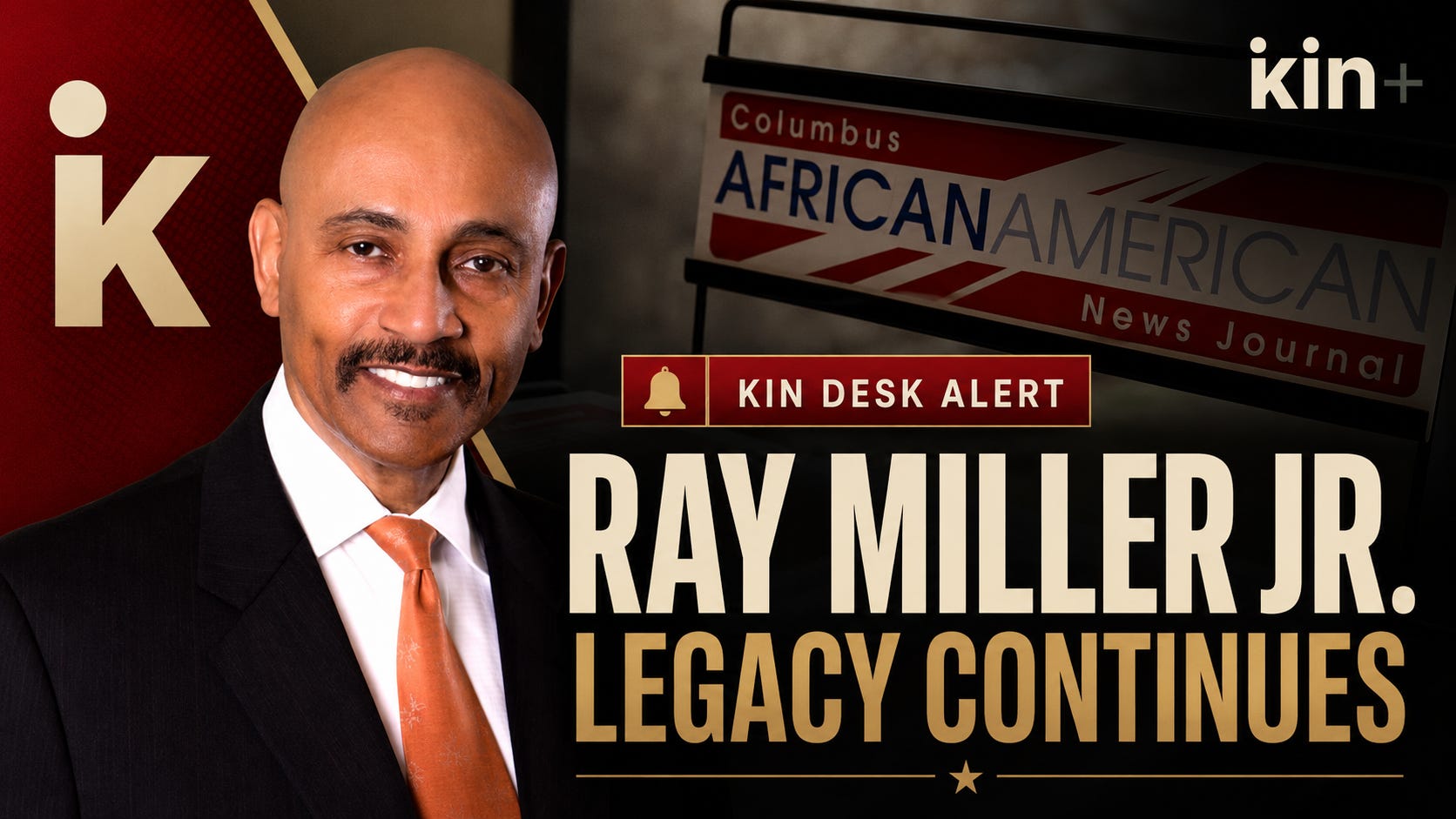
Black Columbus lost an elder Friday.
But before we reduce former State Sen. Ray Miller Jr.’s life to the number of years he spent in office, the committees he sat on or the titles he held, there is something more important to understand about the man:
Ray Miller built things.
Institutions.
Programs.
Leadership pipelines.
Public policy.
And eventually, his own Black-owned media outlet.
Miller died early Friday, Aug. 28, at 77, according to his family. His family said information about a celebration of life will be announced later. A cause of death has not been publicly announced.
He leaves behind his wife, Marty, and their son, Ray Miller III.
And if you have been around Black politics in Columbus for any real amount of time, you probably know the name.
But this is where we need to slow down.
Because simply saying Ray Miller was a former Ohio senator doesn’t really explain Ray Miller.
He spent 24 years inside the Ohio General Assembly
Miller served 16 years in the Ohio House of Representatives and another eight in the Ohio Senate, eventually becoming Senate minority leader.
The Ohio Statehouse identifies Miller as the 13th Black person elected to the Ohio Senate. His legislative career stretched from the early 1980s through 2010, with a period outside the legislature during the 1990s.
Before that, Miller had already begun building a life around government and public policy.
He worked with C.J. McLin, the Dayton legislator who helped establish the Ohio Legislative Black Caucus, and later served in the administration of President Jimmy Carter. Former Gov. Richard Celeste remembered Miller Friday as someone who first entered his orbit as a young Ohio State graduate and legislative intern before becoming much more.
Then came the legislation.
And this is where the record starts showing you the difference between somebody who held a seat and somebody who used that seat to construct something.
Some of what Ray Miller built is still operating
Miller was the visionary and founder behind the Ohio Commission on Minority Health, created after state leaders began confronting evidence of major racial disparities in health outcomes.
The Commission itself identifies Miller as its visionary and founder. Columbus City Council records show that Miller helped develop the Governor’s Task Force on Black and Minority Health and then sponsored the legislative action that established the Commission in 1987.
Now, that was symbolic.
It created actual state infrastructure focused on disparities affecting Black Ohioans and other minority populations.
Miller also sponsored the Community Mental Health Act of 1988 and legislation associated with creating Ohio’s state infrastructure for alcohol and drug addiction services. Former Gov. Celeste called Miller a stalwart in the state’s mental-health reform effort.
He helped establish state funding for Head Start in Ohio.
He authored legislation creating the Institute for Urban Education at Central State University.
He pushed for minority-health programs to receive a portion of Ohio’s tobacco-settlement money.
And he pushed the Ohio Statehouse to create a space honoring George Washington Williams, the first Black member of the Ohio General Assembly.
That’s policy.
That’s infrastructure.
That’s the kind of stuff that can keep touching people’s lives years after everybody has forgotten the press conference where it was announced.
And Miller wasn’t exactly known for quietly sitting in his chair when race entered the room, either.
Former state Rep. David Leland recalled Miller confronting another House member after the lawmaker made a racist joke. Leland said Miller immediately stood up and made clear that racist jokes had no place in the Ohio House.
State Sen. Hearcel Craig, who said he had known Miller since the two were in seventh grade, remembered him Friday as a “fierce fighter for justice.”
But here’s the part of Ray Miller’s story that should matter especially to us.
He didn’t just understand political power. He understood media power.
After all those years inside government, Ray Miller did something else.
He became a Black media owner.
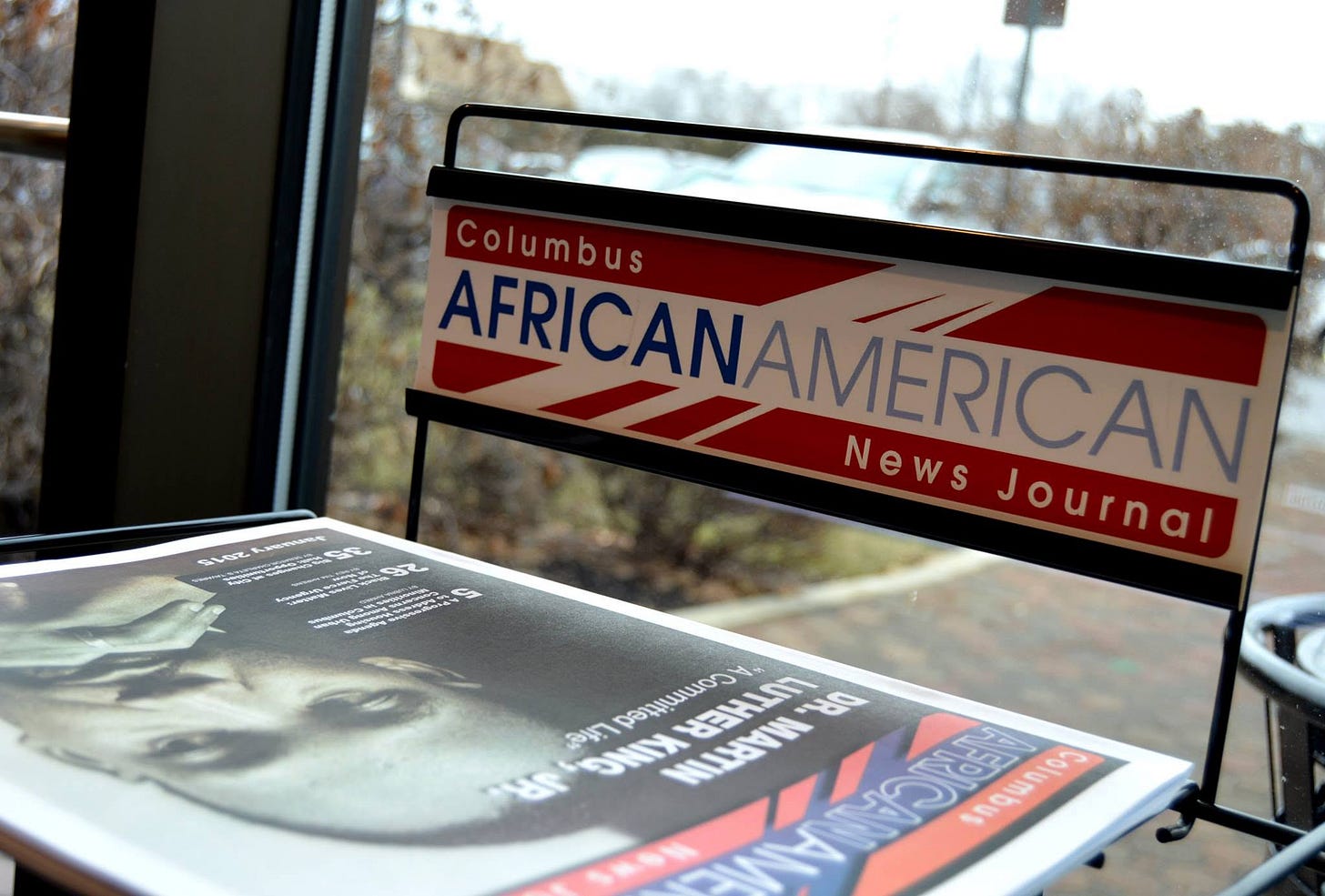
In January 2011, Miller founded The Columbus African American News Journal.
In 2017, the publication expanded its reach into Dayton and became The Columbus & Dayton African American. Miller served as its president and publisher.
Think about that for a minute.
This man had spent decades sitting inside the rooms where government decisions were made.
He had seen how legislation moved.
He knew how budgets worked.
He knew who had influence.
He knew what happened when Black communities did not have enough people watching those rooms.
And after leaving elected office, one of the things he decided Black Ohio needed was its own press.
That was not accidental.
Miller had talked publicly about growing up on Columbus’ East Side and spending time at Raleigh Randolph’s newsstand on Mt. Vernon Avenue reading Black-owned newspapers from around the country — papers including the Call & Post, New York Amsterdam News, Chicago Defender and Pittsburgh Courier.
What fascinated him was seeing Black people using the press to speak for themselves about the issues affecting their own lives.
Decades later, he built one himself.
The mission of The Columbus & Dayton African American was straightforward: educate, inform and empower.
Its pages covered the things Black newspapers have historically covered when everybody else either missed the story or missed us inside the story: politics, education, policing, health, housing, economic inequality, leadership and the institutions shaping Black life.
At its height under Miller, the free publication reported distributing more than 40,000 copies through churches, businesses and other locations across Columbus and Dayton.
And there is something else important here.
The institution did not begin and end with Ray Miller Jr.
His son, Ray Miller III, worked alongside him inside the publication for years. Previous mastheads list Ray III as assistant editor while also overseeing layout and design.
According to information provided to Kin+ for this story, the publication continues today under Ray Miller III’s editorial direction.
That’s not a footnote.
That’s the story.
Now, the read.
We talk a lot about legacy after somebody dies.
Sometimes we use that word too easily.
Legacy becomes a photograph.
An award.
A building with somebody’s name on it.
A resolution from City Council.
A few politicians posting pictures with the deceased and telling us how much they meant.
But there is another test.
Did you build anything that could live without you?
Ray Miller spent much of his life apparently obsessed with that question.
He built public policy.
He helped build institutions around minority health.
He invested in leadership development. The Ray Miller Institute for Change and Leadership and his Progressive Leadership Academy were explicitly built around transferring knowledge to people who would come behind the existing generation of Black leadership. Columbus officials say hundreds of people have participated in that leadership pipeline.
And then he built a newspaper.
His son learned the operation beside him.
And now the son is carrying the editorial work forward.
That’s succession.
That’s different from simply having influence.
Because influence dies when you do.
Institutions don’t have to.
And there is something especially important about that lesson for Black Columbus right now.
We’ve had Black newspapers here before.
We’ve had Black radio.
We’ve had organizations, businesses, political operations and community institutions that were inseparable from the personality who created them.
And too often when that person leaves, retires or dies, the thing they spent decades building leaves with them.
Ray Miller’s media story gives us another model:
Build the thing. Bring the next generation inside. Teach them how it works. Then leave them something they can actually carry.
There is also a beautiful symmetry to it.
Ray Miller once stood inside the Statehouse fighting over what Ohio government would do for Black people.
Then he built a Black-owned newspaper capable of watching that same government and telling Black people what it was doing.
One institution works inside power.
The other watches power.
Miller understood the necessity of both.
What this means for Black Columbus
There will be plenty written over the next several days about Ray Miller the politician.
There should be.
Twenty-four years in the Ohio General Assembly deserves serious examination.
His work around minority health deserves examination.
His leadership development deserves examination.
His fights inside the Statehouse deserve examination.
But Black Columbus should remember Ray Miller the institution-builder, too.
Especially Ray Miller the Black publisher.
Because owning the microphone matters.
Owning the printing press matters.
Owning the outlet matters.
Building something capable of telling our story after the founder is gone matters.
And today, one of the institutions Ray Miller built is being asked to do something uniquely difficult:
cover the loss of the man who built it.
While his son helps carry that work forward.
That may tell us as much about Ray Miller’s legacy as any bill number ever could.
The move
For now, give the Miller family room to grieve.
His family says information about a celebration of life will be released later, and Kin+ will update this story when those details are confirmed.
But we’re also asking Kin Nation to help us build the fuller record.
If Ray Miller mentored you, taught you, helped your organization, brought you through one of his leadership programs, fought for an issue that touched your family, or if you have old campaign materials, photographs, or editions of The Columbus African American News Journal, we want to hear from you.
Not simply so we can say goodbye.
So Black Columbus can document what he built, who he built with and who is carrying it now.
Because Ray Miller Jr. is gone.
The institutions are still here.
And maybe that’s the point.
Welcome home.
Developing: This story will be updated as additional information about Miller’s death, memorial arrangements and public remembrances is confirmed.

Independent local reporting takes work.
Join Kin Nation and stay connected to what happens next.